

5th May 2026 River Deben Environment Monitoring Results

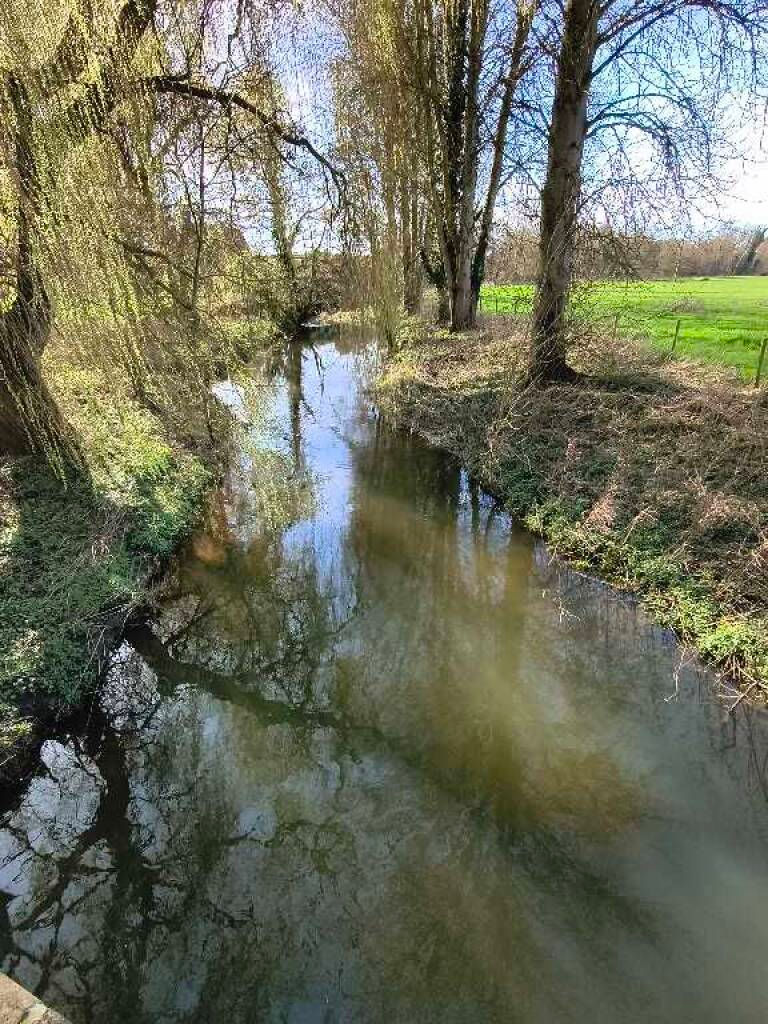
April and early May saw little or no rain and river levels and flow rates have continued to drop. Hence May results are impacted by low flow - for example at Debenham where 5 of the 16 sampling points were completely dry (only one in April). Given the lack of rain, there appear to have been no reported Combined Sewer Outflow (CSO) releases from Anglian Water in the past weeks which is most encouraging.
1. E.coli
Levels of bacterial pollution across most the catchment remain very low with the exception of the outfall samples taken directly or close to the Anglian Water treatment works. In the upper Deben (above Easton), levels of E.coli are negligible and there is no significant pollution evident in the tidal section.
At Debenham, E.coli levels are similarly low although there are a couple of spikes in the Aspall area which may be due to very low flow or to private outfall pollution.


2. Phosphate
There is a similar picture for phosphate in the River Deben although Rendlesham at 7.24 mg/litre and Wickham Market at 1.17 mg/litre are notable outliers. The Rendlesham STW phosphate stripper commissioning (due in early 2026) has yet again been delayed and at Wickham Market Sewage Treatment Works (STW) phosphate levels are still above EA permit levels (maximum 1.0 mg/litre). The latter is concerning given that during late April, tankers were used to remove sewage water to other plants as the phosphate levels had spiked well above the EA permitted target.
Encouragingly, the upper Deben remains well within the "healthy river" target of 0.1 mg/litre. However, there is cause for concern at the phosphate levels in the River Fynn which continue to be well above those for the rest of the catchment. This issue remains a topic for discussion with Anglian Water.
At Debenham, phosphate levels remain at acceptable levels and even at the Debenham STW outfall are well within permitted levels (the Debenham STW permit limit is 0.5 mg/litre).


3. Nitrate

Nitrates are an important pollutant coming from agricultural runoff, STW's and from other sources; when combined with phosphates these create weed, algal and biofilm growth. In much of the non-tidal Deben, nitrate levels have declined somewhat since April although those for most of the Anglian Water STW outfalls remain very high.
However, nitrate levels in the Brandeston to Debenham section remain quite high and alongside lower flow have resulted in increased algal growth; we have consulted with John Findlay at the Environment Agency who confirms that this "biofilm" is most likely due to high nitrate alongside sediment deposits. The photo from Brandeston Ford below shows this effect covering weed and gravel with brown/green film.
In the Fynn/Lark, nitrate levels are broadly similar to those in April. The Henley STW shows very high pollution and the two Martlesham samples are also concerning.


4. Ammonia
Ammonia is an important pollutant as it kills aquatic life at quite low concentrations. Our findings over past months indicate that high ammonia levels are almost all associated with STW outfalls and private cess-pit leakage.
The chart below for the non-tidal Deben shows the very high ammonia levels at Wickham Market and Charsfield with the latter having a sizeable downstream impact. It is also interesting to note the higher levels upstream at Debenham, almost certainly due to very low flow.
For the Fynn/Lark section, the two River Lark spikes appear to be associated with the Grundisburgh STW and its downstream impact. But here, these are not at an Environment Agency reportable level.



Comments